The southern mill strikes that history textbooks forgot
American labour history, as taught in most high schools, happens in northern cities. Coal in Pennsylvania, steel in Chicago, garment work in New York.
The southern textile industry employed hundreds of thousands of people across the Carolinas, Georgia, Tennessee and Alabama, and what happened in those mill villages in 1929 and 1934 is as dramatic as anything in the standard account. My students had never heard a word of it, and neither had I until well into my own teaching career.
The mill village
You cannot understand the strikes without understanding the arrangement.
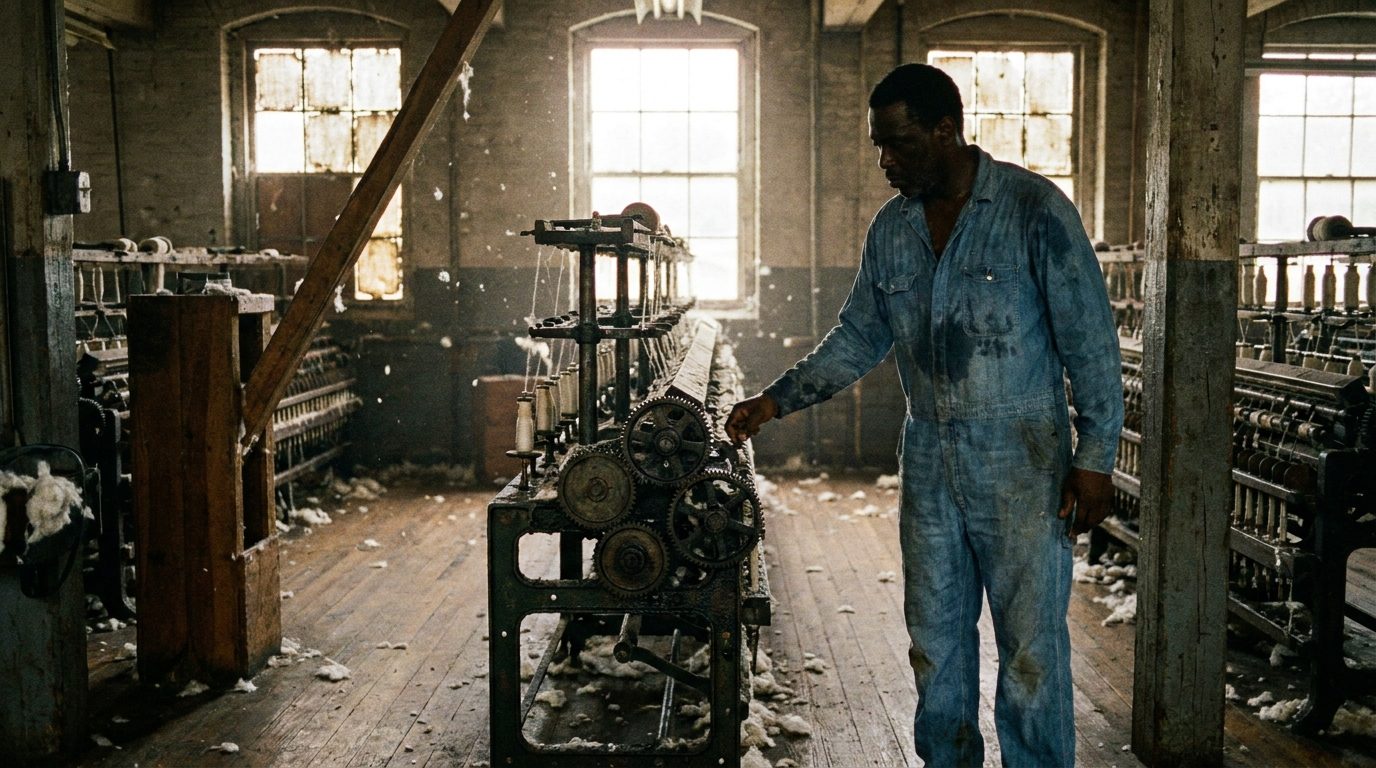
The company owned the mill. It also owned the houses, the store, the school and frequently the church. Rent came out of wages. Credit at the company store came out of wages.
Whole families worked, including children well past the point where anyone pretended otherwise. A family's housing depended on a family member working in the mill, which meant that losing a job meant losing a home the same week.
That is the leverage that made these strikes so bitter.
The stretch out
The immediate cause of the 1929 strikes was a set of management practices workers called the stretch out.
More machines per worker, tighter time standards, and closer supervision, introduced through efficiency studies, without a corresponding increase in pay. The pace of work rose sharply.
People who describe these strikes as being about wages are only half right. They were about the intensity and the control, and the workers said so at the time.
1929
Elizabethton in Tennessee went out first, in March, at a rayon plant, and it was led substantially by young women.
Gastonia in North Carolina followed at the Loray Mill in April. That one turned violent. The police chief was killed in a confrontation at the strikers' tent colony, and the trials that followed drew national attention. A striker and ballad singer, Ella May Wiggins, was shot dead on the way to a union rally, and no one was convicted.
Marion in North Carolina saw strikers killed by a sheriff's deputies in October.
The strikes were broken. The union presence largely collapsed.
1934
The General Textile Strike in September 1934 was on a different scale entirely. Hundreds of thousands of workers across the industry, from New England down through the southern states, in what was at the time among the largest strikes in American history.
Flying squadrons moved between mills to bring them out. National Guard troops were deployed in several states. People were killed in Honea Path in South Carolina, and at other places.
It lasted about three weeks and it ended without the workers winning their central demands. Employers blacklisted strikers afterwards and many never worked in a mill again.
Why it vanished from the story
Several reasons, and they compound.
The strikes lost, and losing movements get less attention.
The blacklisting was effective enough to make people afraid to talk, and that silence lasted a long time. Oral historians working in the 1970s and 1980s found families where the strike was known about but never discussed.
Local and state historical narratives were shaped by people with no interest in preserving it.
And the textbook framework treats the South as a place where race is the only subject, which pushes a story about white and Black workers, wages and machine speeds outside the frame the chapter has set up.
Teaching it
The oral history collections are the way in. The Southern Oral History Program at the University of North Carolina holds a great deal of it, and the book Like a Family drew on that work.
Honea Path put up a memorial in the 1990s, which is well over half a century after the event, and the story of how that memorial came to exist is itself a good lesson about who controls local memory.
I used to give students the mill village arrangement first, on its own, and ask them what they would do if the company that paid them also owned their house. They worked out the rest themselves.