How to read a nineteenth century company ledger
A ledger is not a story. It is a list of numbers kept by a bookkeeper who assumed everyone reading it already knew what the numbers meant.

Hal Kimball has been the archivist at a county historical society in Maine since 1998. He writes about the everyday past, town records, ledgers, letters, the things people threw in a box and forgot. He believes most history is boring until you find the one page that is not.
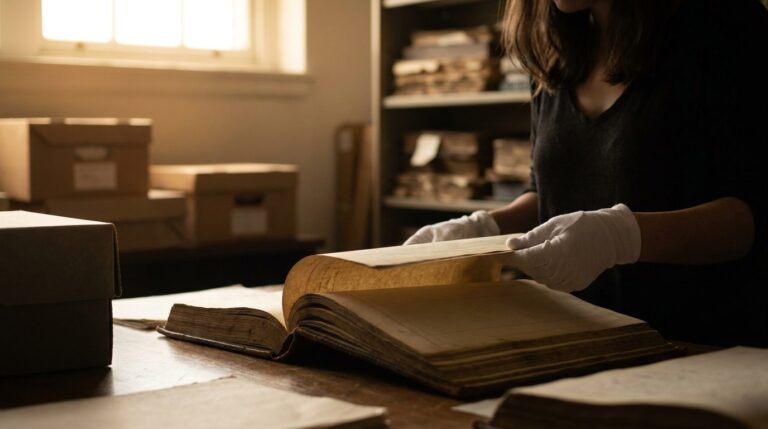
A ledger is not a story. It is a list of numbers kept by a bookkeeper who assumed everyone reading it already knew what the numbers meant.

The property lines in a coastal Maine town do not look like the lines in an Ohio county, and the reason is that Maine was divided up before anyone had a system for doing it.
People come in here convinced that an ancestor who served in the Civil War must have been at Gettysburg, and are disappointed to find he spent the war at a fort on the Maine coast.
Town school records are the most underused source in local history, and they survive in far greater quantity than people expect, because nobody ever thought they were interesting…