
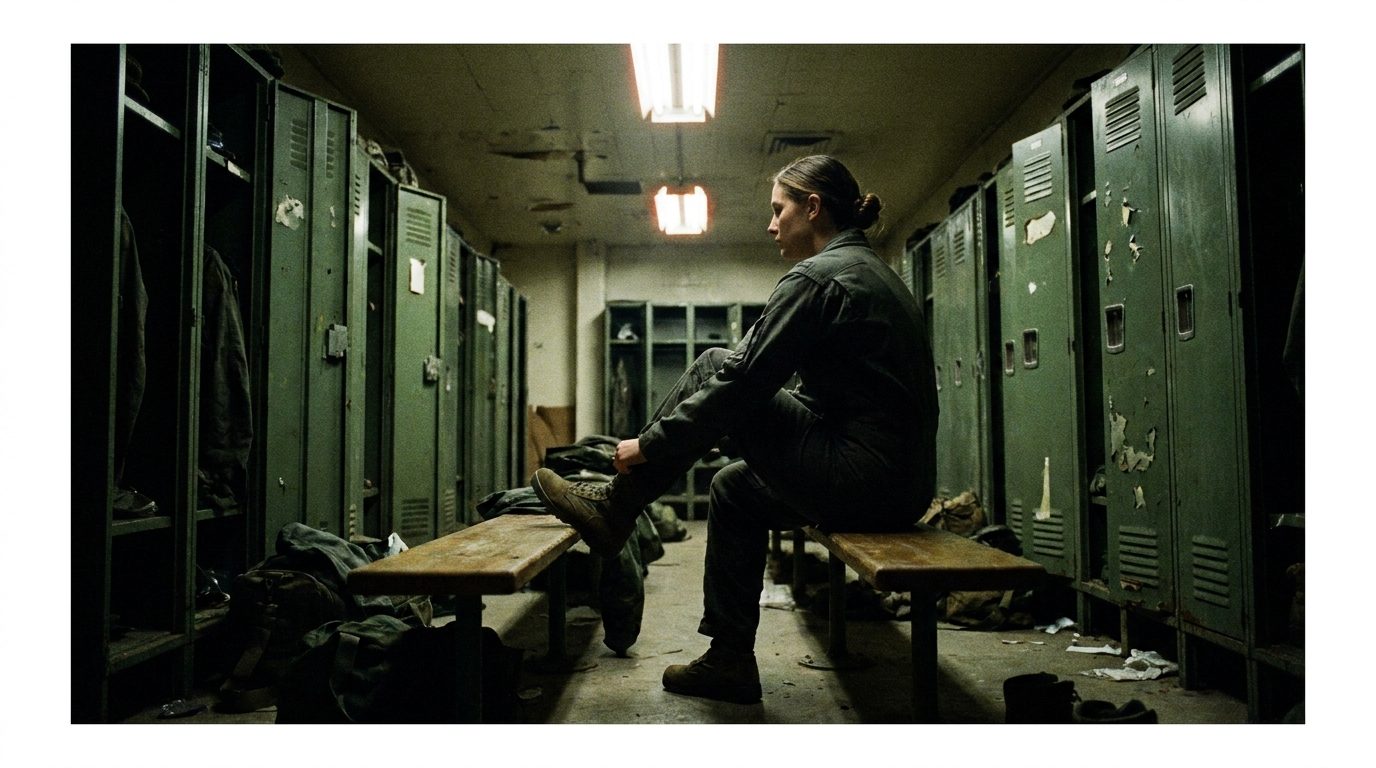
What the first female combat pilots faced after the Gulf War
The combat exclusion for women flying aircraft came down in 1993. The Gulf War in 1991 is a large part of why.
Women flew in that war. They flew transports, tankers and helicopters, they flew into hostile airspace, and two were taken prisoner. The argument that women could be kept out of combat by assigning them to non combat aircraft collided with the fact that in that war there was no reliable line between the two.
Congress repealed the statutory prohibition on women flying combat aircraft in 1991, and the Secretary of Defense directed the services to open those assignments in 1993.
What the first group walked into
Training pipelines that had never had a woman in them. Squadrons where every social norm had been built around a single assumption. Facilities, in some cases literally, with no provision for them.
And a level of attention that is difficult to overstate. The first women in fighter and attack squadrons were covered by national media, which meant every mistake any of them made was a story, and a mistake by a male peer was a Tuesday.
That is the part the pilots I have spoken to raise first. Not hostility, though there was some. The scrutiny.
One of them described it as flying with the knowledge that a bad landing would be on television. That is not a normal condition for a junior aviator learning a demanding aircraft.
The Tailhook context
The 1991 Tailhook convention and the assaults that took place there broke as a scandal in the same period, and it shaped everything that followed.
It made the culture of naval aviation a matter of public and congressional attention, which accelerated the policy change. It also created a backlash inside the community, and some women arriving in squadrons in the following years found themselves treated as the reason careers had ended.
Those two things were happening at once, and you cannot understand the experience of the first cohort without both.
The Kara Hultgreen case
Lieutenant Kara Hultgreen was one of the first women qualified to fly the F-14 in a fleet squadron. She was killed in 1994 when her aircraft went into the water on approach to a carrier.
The mishap investigation identified an engine failure and a compounding factor in the recovery. Carrier aviation kills people and the F-14 in that era killed a number of them.
What happened afterwards was that her death became a political argument. Material was leaked and circulated, and her competence was debated publicly in a way that the deaths of male aviators in similar accidents were not.
Every woman flying in that period watched that happen and understood what it meant for them.
What they built
The women who stayed became instructors, then commanders. The first woman to command a Navy fighter squadron, the first to command an air wing, the first women to reach flag rank from that community, all came out of this group or the ones immediately behind it.
That progression is the actual achievement, and it is more important than any individual first, because a pipeline with women at every level stops being remarkable and starts being normal.
Ground combat arms opened in 2015, more than twenty years later, and the arguments made against it were very close to the arguments made in 1991. The people making them had access to two decades of evidence about how the aviation integration had gone.
Why I write about it
I served eight years in the Army and got out in 2017, so I came in long after all of this was settled and I benefited from norms I did not have to fight for.
That is true of everyone. Every generation of service members inherits a set of arrangements that somebody paid for.
The women who went into those squadrons in 1993 and 1994 did a job while being watched in a way nobody should have to be watched, and a lot of them did not stay in. The ones who did built the thing that came after.
If you want the primary material, the Naval History and Heritage Command has oral histories, and several of the pilots have written memoirs. Go to those rather than the contemporary news coverage, which was written in the middle of the argument.