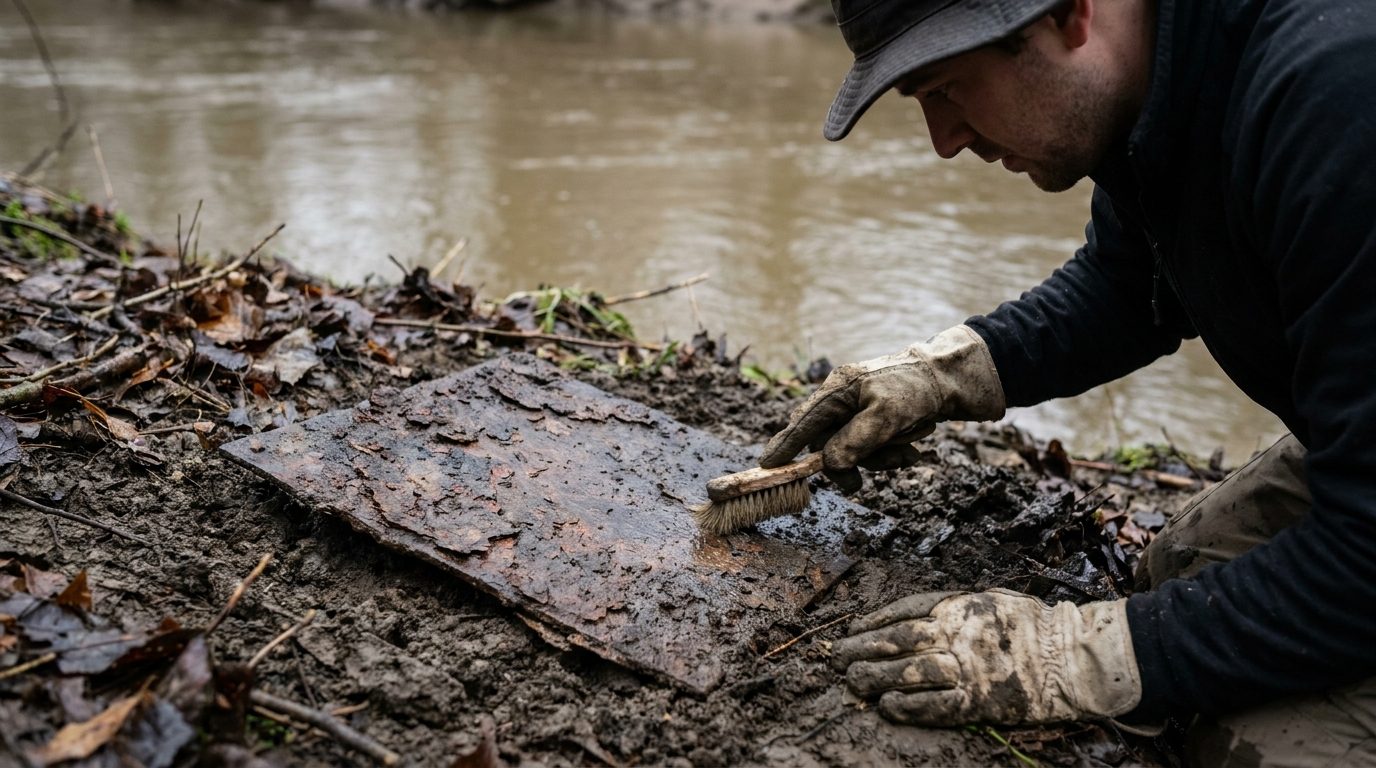
Why the ironclad USS Baron DeKalb was so vulnerable from below
The Baron DeKalb was sunk in July 1863 in the Yazoo River, and she was not sunk by gunfire. She was sunk by what the period called torpedoes and what we would call mines.
That distinction matters, because the City class ironclads were built with a specific threat in mind and it was not that one.
What she was
She began as the St. Louis, one of seven City class gunboats built by James B. Eads for river service in 1861. She was renamed Baron DeKalb in 1862, partly to avoid confusion with another vessel.
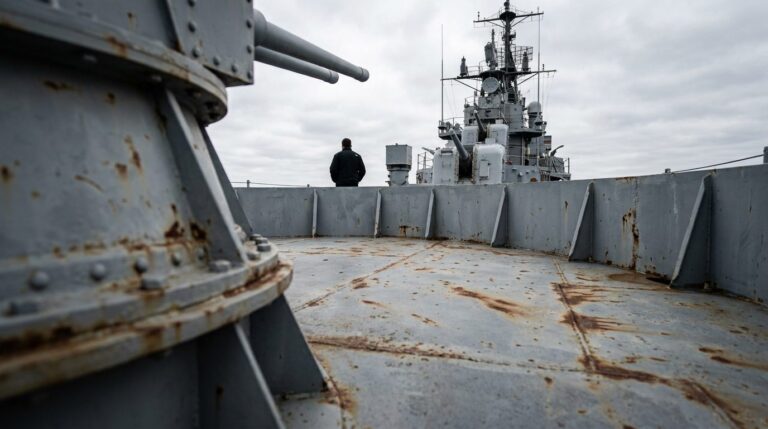
The design was shallow draft, flat bottomed, and heavily armed for her size. Casemate sloping inward, armour on the forward face and around the machinery, paddle wheel in a well aft where it was protected.
She was built fast, in a hurry, for a war that had already started.
What the armour was for
River combat in 1861 meant forts and field artillery firing more or less horizontally at a vessel coming up a river.
So the armour went where that fire would land. The forward casemate was the thickest. The sides had protection around the engines and boilers. The whole layout assumed threats arriving from ahead and from the banks.
Within those assumptions the design worked. These boats took a lot of shot and kept going, and they were decisive on the western rivers in a way that is underappreciated next to the coastal war.
What was left uncovered
The bottom. The decks. Everything that assumed nobody would be shooting from those directions.
A flat bottomed shallow draft hull with a large plan area is close to the worst possible shape for resisting an underwater explosion. The blast has a large surface to act on and there is very little structure between the river and the machinery spaces.
They also sat low. Freeboard was minimal, which was fine for presenting a small target and bad for reserve buoyancy once water got in.
And there were very few watertight subdivisions by later standards. Flooding did not stay where it started.
The Confederate answer
Confederate engineers put a great deal of effort into river obstructions and mines, and on the western rivers they were effective out of all proportion to their cost.
The devices varied. Demijohns and barrels filled with powder, fired by contact triggers or by wire from the bank. Crude by any later standard and entirely adequate against a flat bottomed hull.
Baron DeKalb struck two of them while operating up the Yazoo, and she went down in shallow water. Accounts indicate the crew got off, and the loss of life was limited, which given how quickly these boats flooded was not a given.
What it demonstrated
Armour answers the threat it was designed against and no other. That reads as obvious written down. It has been learned and relearned repeatedly since, at considerably greater cost.
The other lesson is about cost exchange. A powder filled barrel and a length of wire against an ironclad gunboat is an exchange rate that favours the side with less industry, and both sides drew conclusions from it that carried well past 1865.
On the sources
The City class and the river war are reasonably well documented but the details of individual mine actions are often thin and the accounts do not always agree. Exact positions, the precise number of charges, and the sequence of events are the kinds of things that get reported differently by different participants.
Where I have given a figure here it is the one generally accepted. Where the record is genuinely unclear I have said so rather than picking the version that reads better.