Why the USS Becuna SS 319 was rebuilt for the Cold War
The Becuna is moored in Philadelphia next to the cruiser Olympia, and most visitors walk through her in fifteen minutes without realising they are looking at two different submarines wearing one hull.
She was launched in 1944 as a Balao class fleet boat, made war patrols in the Pacific, and came home. Then in the early 1950s she was cut open and rebuilt into something designed for a completely different war.
What she was built to do
A Balao class boat was a surface ship that could submerge.
She ran on the surface on diesels, which is where she made her speed and covered distance. She dived to attack and to hide, ran on batteries while down, and had to come back up to recharge. Submerged endurance was measured in hours at low speed.
That was entirely adequate against Japanese merchant shipping in the Pacific, and American fleet boats were very good at it.
Why that stopped working
After 1945 the problem changed. The likely opponent was the Soviet Navy, and the intelligence that came out of Germany changed everyone's assumptions about what a submarine could be.
The German Type XXI was designed around staying down. Streamlined hull, far greater battery capacity, a snorkel so the diesels could run at periscope depth. It was fast underwater and it did not need to surface to recharge.
Very few were completed and they achieved almost nothing operationally. As an influence on what came next, they mattered enormously.
The United States Navy did not have the money or the time to build a new fleet from scratch, and it had a large number of perfectly sound war built boats. So it rebuilt them.
The GUPPY programme
The name comes from greater underwater propulsive power, with a letter added to make it pronounceable. There were several versions, and Becuna went through the conversion that gave her the classification GUPPY IA.
The changes were consistent in principle across the programme. Strip the deck gun and everything else that caused drag. Round off the bow and fair in the hull. Replace the old open bridge structure with a streamlined fairing, which sailors called the sail.
Then the important part, which is invisible from outside. Much greater battery capacity, and a snorkel mast so the diesels could be run at periscope depth without surfacing.
The result was a boat that was slower on the surface, because the fine bow made her wetter and less comfortable, and considerably better underwater. Which was the whole point.
What that meant for the men aboard
Worse living conditions, mostly.
Batteries take space and the space came out of everywhere else. Snorkelling is genuinely unpleasant. When the head valve dips under a swell it shuts, the diesels keep drawing air, and they take it out of the boat. Your ears go with the pressure drop, repeatedly, for hours.
Veterans of that era talk about snorkel runs the way people talk about a bad crossing.
What she actually did
Her Cold War career was mostly unglamorous and largely unrecorded in public. Atlantic and Mediterranean patrols, exercises, submarine warfare training for surface ships and aircraft.
Much of what these boats did in those decades remains thin in the public record, and I am not going to speculate about specific operations.
She served until 1969, which is a long life for a hull laid down in 1943, and that is the real point of the GUPPY programme. It bought the Navy fifteen years of useful submarine strength while nuclear propulsion was developed and paid for.
Seeing it for yourself
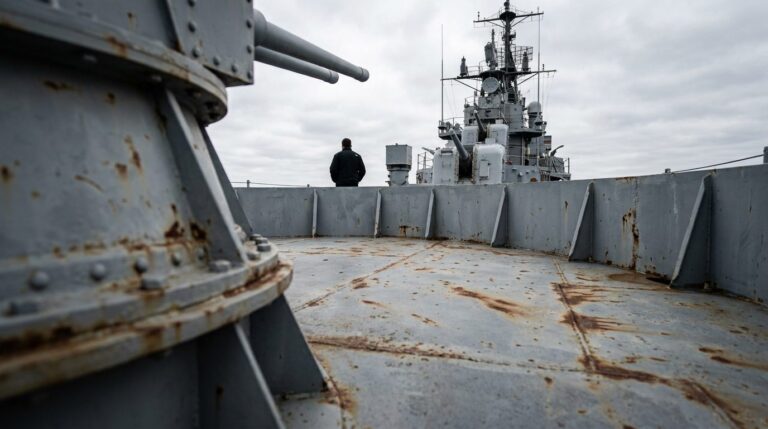
If you go aboard, look at the sail from the pier first and then look at a photograph of a wartime fleet boat. The difference is obvious once you know to look: no deck gun, no railings, no open platform structure, a smooth curve where there used to be clutter.
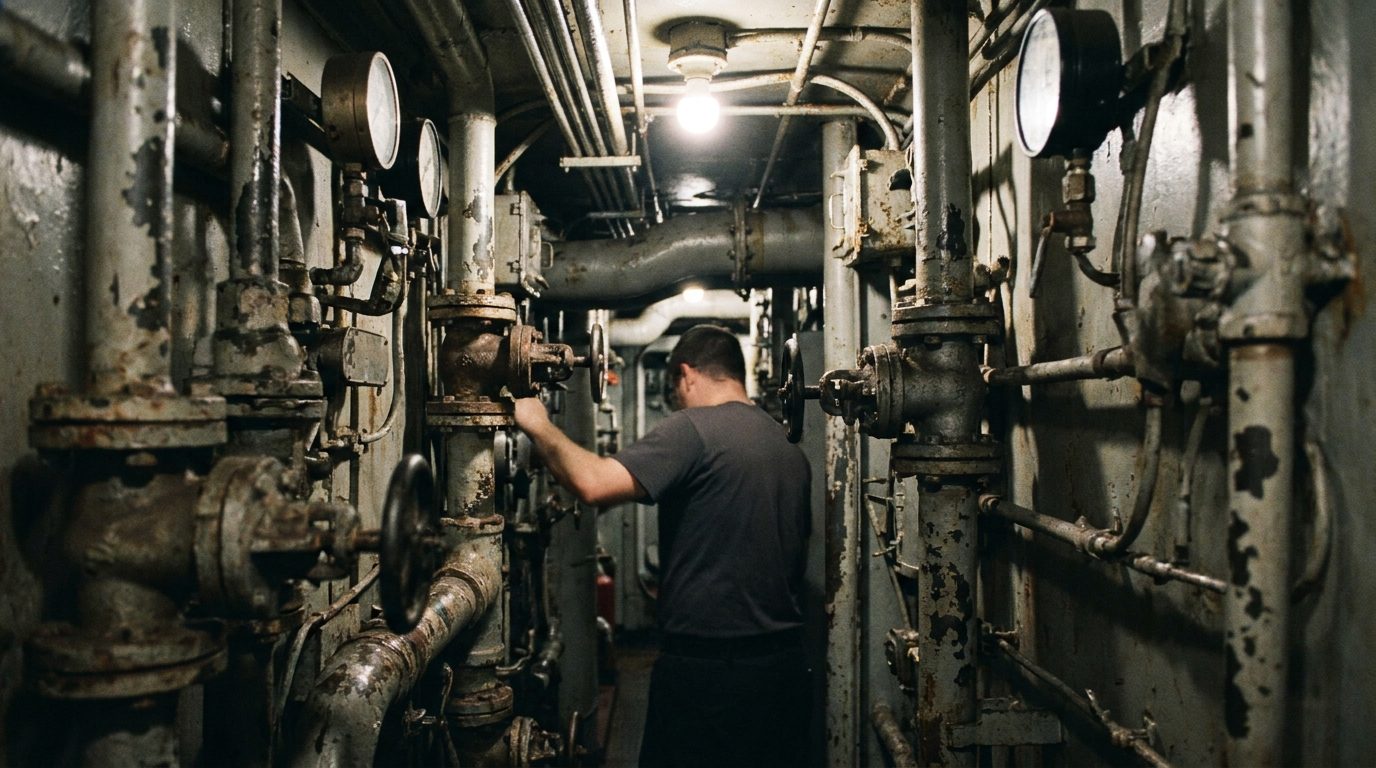
Then go below and notice how little room there is, and remember that the rebuild took space away rather than adding it.
She is SS-319. There is only one Becuna, so that is one hull number nobody gets wrong, which makes a change.